
The Accidental Manager Crisis: Why Buckinghamshire SMEs Need Better Management Support
Buckinghamshire is an incredible place to build a business. The county operates as a genuine entrepreneurial engine. It is home to more than 31,000 VAT/PAYE registered businesses, with micro-businesses employing fewer than 10 people making up around 91% of the county’s enterprises. That is one of the highest concentrations of micro-businesses in England, and the highest among the former Local Enterprise Partnership areas.
However, when these lean, fast-moving SMEs inevitably scale, a hidden operational hurdle often takes root. Companies naturally want to reward loyalty, so they look inward, promoting their best engineer, their top salesperson, or their most reliable operator to lead the team.
The intention is usually sound: reward loyalty, recognise competence, and give capable people a chance to grow.
The Reality of the Accidental Manager
According to landmark research from the Chartered Management Institute (CMI), 82% of managers entering leadership positions have not had any formal management or leadership training. They are thrust into complex, demanding roles armed with nothing but their technical expertise. This creates what the CMI accurately calls the “accidental manager”.
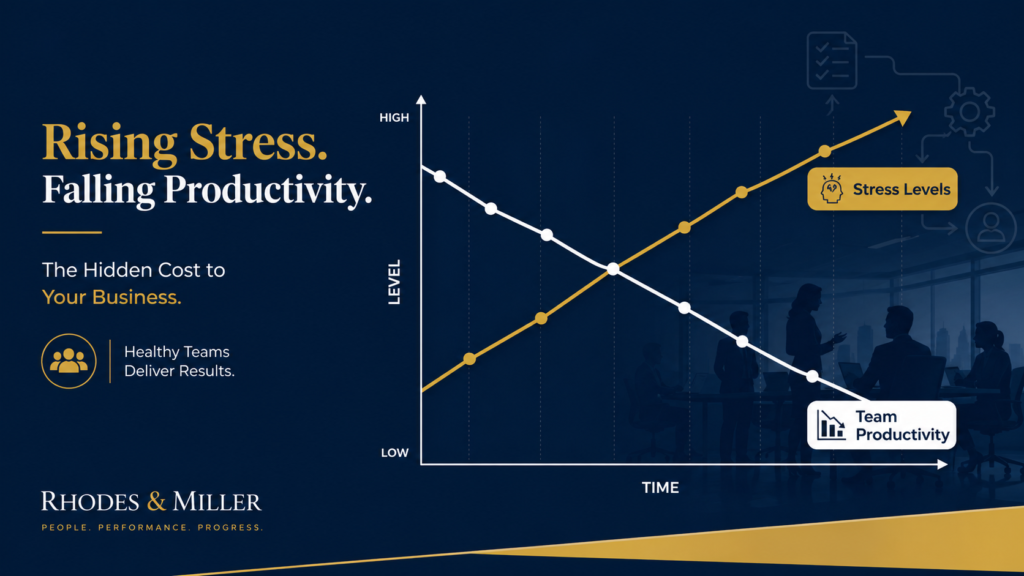
It is vital to understand that these newly promoted supervisors are not failing on purpose. Managing people demands a completely different skill set from executing technical tasks. When a brilliant employee is promoted without the practical tools to lead, they quickly become overwhelmed. They often end up doing the work themselves instead of delegating, which leads to burnout, daily firefighting, and a drop in team morale.
A Straight-Talking Approach for Local Businesses
When an accidental manager struggles, it is not their fault—it is an organisational oversight. Leaving leadership to chance can be a very expensive problem for any scaling Buckinghamshire SME to absorb. In a county dominated by small firms, the impact of one unsupported manager can be felt quickly: in standards, staff morale, communication, and the owner’s own workload.
At Rhodes & Miller, this is the type of management gap we are built to address. Formal training has its place, but classroom learning alone often struggles to address the day-to-day realities of leading people on the floor. What these new managers desperately need is practical, on-the-ground mentoring. They need to be taught how to hold steady authority, guide a team, and communicate expectations effectively within their actual working environment.
Growing your team through internal promotions shouldn’t mean leaving your best people to struggle. It is time to stop hoping they will just figure it out, and start giving them the practical, targeted support they need.
Our fixed fee 6-week management turnaround programme
It is designed to help a new or struggling manager improve in the
role. It combines diagnosis and practical on-the-job mentoring.
Links to sources:
Buckinghamshire Economic Intelligence Observatory – Business & Innovation