
The True Price of a Resignation
When an employee hands in their notice, the immediate focus is usually on the recruitment fee. But that is just the tip of the iceberg. According to research from Oxford Economics, the average cost of replacing a single employee earning over £25,000 is £30,614 (Source: Oxford Economics/Unum).
Visible costs like job board ads and agency fees (typically 15-20% of salary) represent only 33% of the total expense. The remaining 67% is hidden in:
- The Productivity Void: It takes an average of 28 weeks for a new hire to reach full effectiveness.
- The Management Drain: Time spent by senior leadership interviewing and onboarding rather than driving the business forward.
- The Ripple Effect: When one person leaves, the increased workload on remaining staff often triggers a second wave of resignations. This happens when the manager responsible fails to counter balance the transition effectively.
The Buckinghamshire Squeeze
Our local economy is unique, and it creates a specific “retention trap” for business owners Buckinghamshire and the surrounding areas.
- High Competition: Buckinghamshire has an exceptionally high employment rate of 81.2% (Source: ONS Buckinghamshire Labour Market). With such a small pool of available talent, replacing a specialist is slower and more expensive than in other regions.
- The Sector Giants: We are home to world-class clusters: Westcott Space Cluster, Pinewood Studios, and Silverstone Technology (Source: Buckinghamshire Council Growth Plan). These sectors set a high bar for benefits and culture, meaning local SMEs must work harder to keep their best people from being “poached.”
- The London Pull: The proximity to the capital means we are constantly competing with London salaries. If your staff do not feel a strong sense of belonging and growth, the commute becomes a much more attractive trade-off.
The “Promoted, But Not Prepared” Problem
One of the most frequent causes of turnover that we come across is what we call the “Accidental Manager.” This happens when your best technical performer is promoted into a leadership role without the proper training.
They are brilliant at their job, but they haven’t been given the tools to manage people. Data shows that leadership quality is the single strongest predictor of whether an employee stays (Source: NatWest Mentor 2026 Benchmarks). Without support, these managers unintentionally drive away your most valuable assets.

The Cost of Doing Nothing
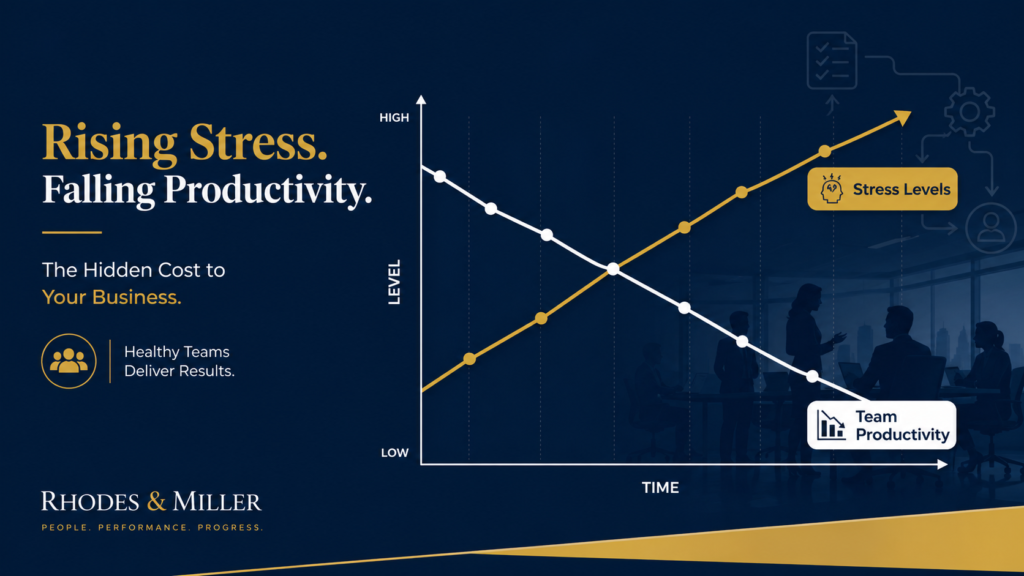
Beyond the £30k replacement cost, there is the daily drain of poor health and engagement. A recent government report highlights that:
- Each day of sickness absence costs a business £120 in lost profit.
- Presenteeism (staff working while unwell or disengaged) costs employers between 4 and 9 productive days per person every year (Source: Gov.uk Keep Britain Working).
Turning the Tide: The Advisor’s Perspective
Smart Managing Directors are moving away from reactive hiring and toward proactive retention. This is where a specialist Advisor like Rhodes & Miller becomes an essential partner.
The goal is to move beyond “perks” and build a resilient culture. Key steps include:
- Auditing Management Skills: Identifying your “Accidental Managers” and giving them the training they need.
- Implementing a “Stay” Strategy: Don’t wait for an exit interview to find out why people are unhappy. Ask them while they are still there.
- Staff Engagement: Aligning your staff retention goals with ongoing “finger-on-the -pulse” staff discussions. Without information on where the bleeds are, you are shooting in the dark.
Retaining a loyal workforce requires a shift from viewing staff as operational assets to recognising them as the primary drivers of business value. The CIPD notes that employee turnover can be kept at healthy levels when business owners understand their staff better. It points to practical retention factors such as good people management, fair treatment, flexibility and employee wellbeing. (CIPD)
Final Thoughts
The businesses that thrive in Buckinghamshire will be those that view their staff as an investment to be protected, not a cost to be managed.
To reduce your staff turnover, give your managers the tools to lead properly. They can then engage with your staff in a more productive way. Preferably before a letter of resignation hits your desk.
This will impact your bottom line and your team’s morale. The results can be eye-opening.
Thank you for reading this important post. Please feel free to reach out if you have any questions or for an obligation free chat.
Warm regards,
Mayur Raja
Founder & Lead Advisor
Rhodes & Miller – Aylesbury
E: mayur@rhodes-miller.co.uk
T: 07796 125813